Why Your Cedar Shingles Turned Black, and the Safe Way to Clean Them
Dark cedar on a Hamptons house is usually a living growth, and the cure is gentler than most people expect.
October 17, 2026 · 3 min read
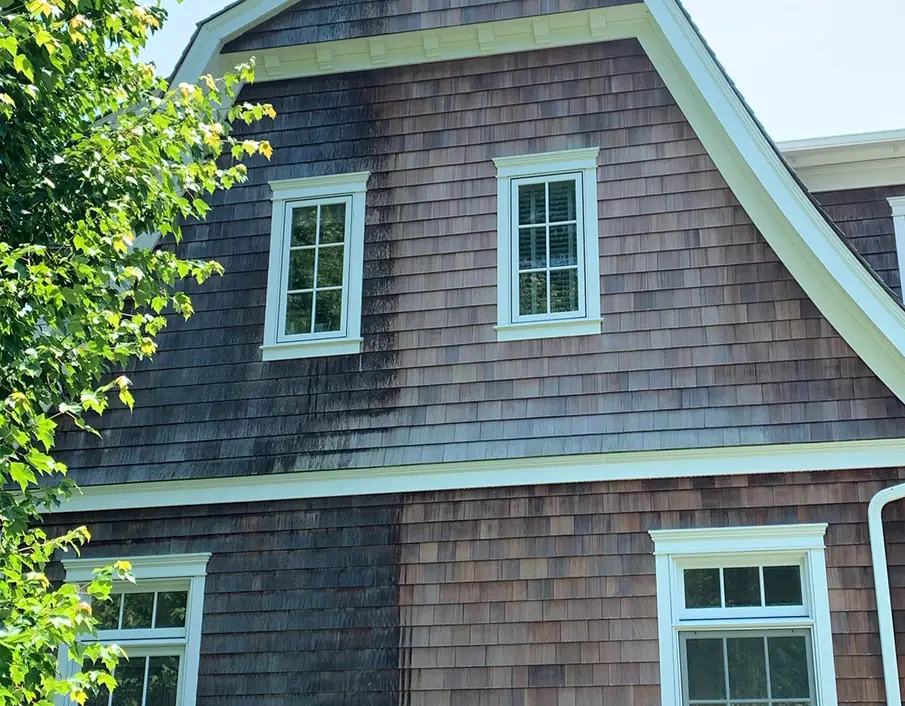
Cedar shingles are part of what makes an East End house look like an East End house. They are also one of the first things to look tired. A few seasons after a house is built or refinished, the walls start turning grey, then dark, then streaky black, usually first on the north side and anywhere shaded by trees.
Most owners assume it is dirt. It is not. What you are looking at is a living growth, and knowing that changes how you should clean it.
What the black actually is
On the East End, the air is damp, the wind carries salt and fine sand, and shaded walls stay wet long after the sun has dried everything else. Cedar is a natural wood with a rough surface that holds moisture. Together, those conditions are exactly what mildew and algae want. They settle in, spread, and darken the surface.
Because it is a growth and not a stain, rinsing it with plain water does very little. The surface may look a bit brighter for a week, but the roots of the growth are still in the wood, and the black comes right back.
Why high pressure is the wrong tool
The instinct is to blast it off. A high-pressure washer will remove the dark layer, but cedar is soft. The force can cut into the grain, lift fibers, drive water in behind the shingles and leave the wood furred, scarred and thirsty. Clean-looking cedar that has been gouged tends to weather faster and hold growth more easily afterward, which means you traded a cleaning problem for a bigger one.
The same goes for other finishes on the same house. Stucco, vinyl and painted wood can all be damaged or stripped by the wrong amount of force.
What soft washing does differently
Soft washing flips the approach. Instead of using force to scrape the surface, it uses a low-pressure system, under 500 PSI, to apply a treatment that kills the algae, mold and mildew at the root. Then the surface is rinsed gently. The growth is dealt with at its source rather than beaten off the top, and the wood is never stressed.
That same low-pressure method works across the materials you find on a typical Hamptons property:
- Cedar shake and shingle siding that has gone black with mildew and algae.
- Stucco, vinyl and painted wood dulled by salt air and sandy wind.
- Roofs streaked with algae and moss.
- Decks, patios and stonework that have picked up stains.
How the process runs
A good soft wash is not just spraying. It follows a sequence, and each step protects something:
- Pre-Inspection: walking the house to find weak spots, loose trim, and areas that need extra care before any water goes on.
- Small Item Removal: moving things like planters, hose reels and furniture so nothing gets in the way or gets treated by accident.
- Plant Protection: covering and wetting down gardens and landscaping, so beds and shrubs come through untouched.
- Treatment: applying the low-pressure wash to the walls or roof so it can work on the growth.
- Clean and Rinse: rinsing everything off thoroughly and leaving the property tidy.
The plant protection step matters more than people realize on the East End, where gardens are a major part of the property. Hydrangeas and borders near the walls are right in the path, and a careful crew works around them instead of through them.
Roofs need the same patience
Algae and moss streaks on a roof are the same story at a different angle. Shingles that look stained from the street are often covered in growth, and scrubbing or blasting a roof can strip the surface off the shingles and shorten their life. A low-pressure approach lets the treatment do the work without grinding anything off the roof.
How often it comes back
Soft washing does not make the house immune. Damp shade and salt air will bring growth back eventually, just more slowly than it returns after a quick rinse. Trimming back branches that keep a wall in permanent shade, and keeping gutters flowing so water does not run down the siding, both help the results last. Check the north and shaded sides each spring, since that is where the first dark streaks show up.
If your cedar has gone dark and you would like someone to look at it before you decide what to do, call Clean Hamptons at (631) 487-8404 or request a quote.
Clean Hamptons, (631) 487-8404
Call (631) 487-8404More articles
How Often Should You Clean Your Windows on the East End?
Oceanfront houses, family homes and storefronts each need a different rhythm, and the right one keeps the glass clear without wasting a visit.
Cleaning Bluestone, Pavers and Decks Without Damaging Them
Every surface around your house has its own limits, and the wrong washing method can leave marks that outlast the dirt.